
RP Engineering

essiccazione linea produzione

Drying Process Line: The 5 Main Stages

Drying process line: let’s discover together all the individual stages involved.

RP Engineering is a company specialised in the construction of industrial drying systems. Specifically, it deals with the design, manufacturing, and installation of all the components that make up a drying plant.

For over 25 years, the company has served clients in various parts of the world, offering highly customised services. First of all, the company offers different types of dryers, both small and medium-sized; moreover, depending on the customer’s specific needs, it also provides the possibility of installing only some of the components that make up the plant. RP Engineering’s production is based on standard models, which are then customised according to the specific requests and needs of each customer.

Drying Process Line: The 5 Stages

Let’s see how a drying plant works by analysing each individual phase of the process.

1 – Wet Material Storage

Before undergoing the drying process, the wet raw material (wood waste, inert materials, algae, coffee waste, etc.) is collected and stored in dedicated containers that fall within the category of raw material preparation systems.

Depending on the customer’s needs and the available space within the facility, the wet raw material can be collected in silos or poured into underground tanks of different sizes (capacity from 5 to 1000 m3).

2 – Wet Material Refining

Before being dried, the wet raw material undergoes a refining process by passing through a mill. In order to obtain an excellent final dried product, the raw material must not only be free of impurities, but also shredded to achieve uniform and suitable dimensions for the subsequent processing stages.

The refining of wet material takes place inside WH series refining mills, efficient and robust machines capable of processing materials, even with large particle sizes, while maintaining low energy consumption.

3 – Raw Material Handling

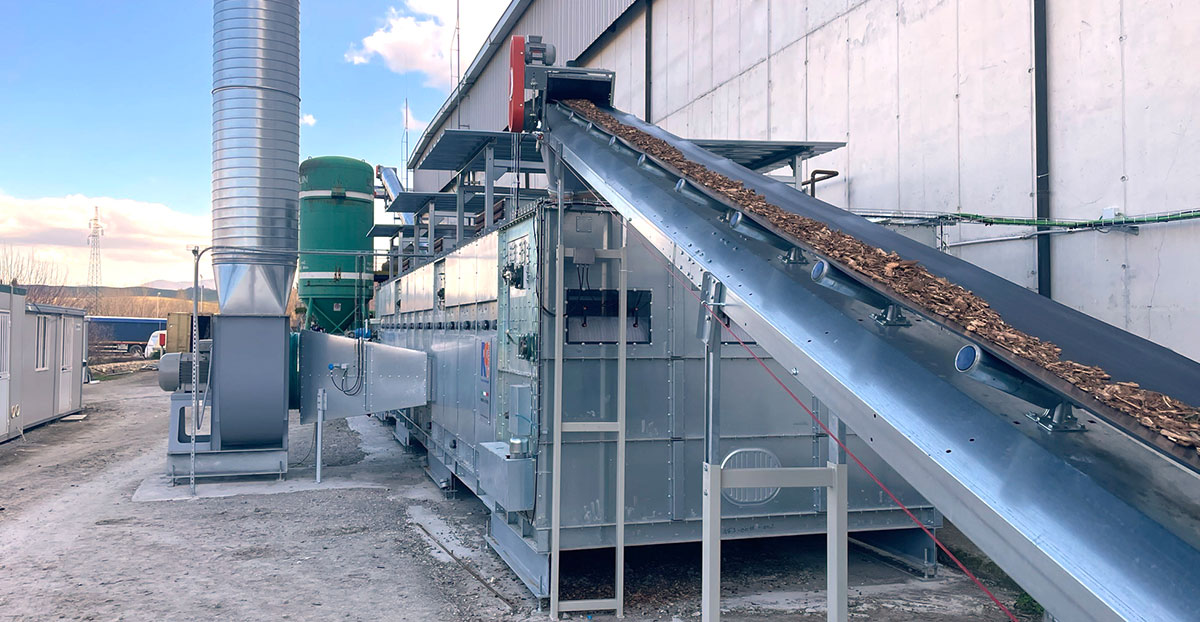
Once refined, the wet raw material is moved and transported into the dryer. The material can be transported using different types of handling systems. Specifically, these include:

  • screw conveyors
  • chain conveyors
  • belt conveyors

The various handling systems have capacities of up to 200 m3/h.

4 – Drying

At this stage of the process, the actual drying of the wet material takes place.

RP Engineering designs and manufactures 3 types of dryers, to be selected according to the material to be treated. Specifically:

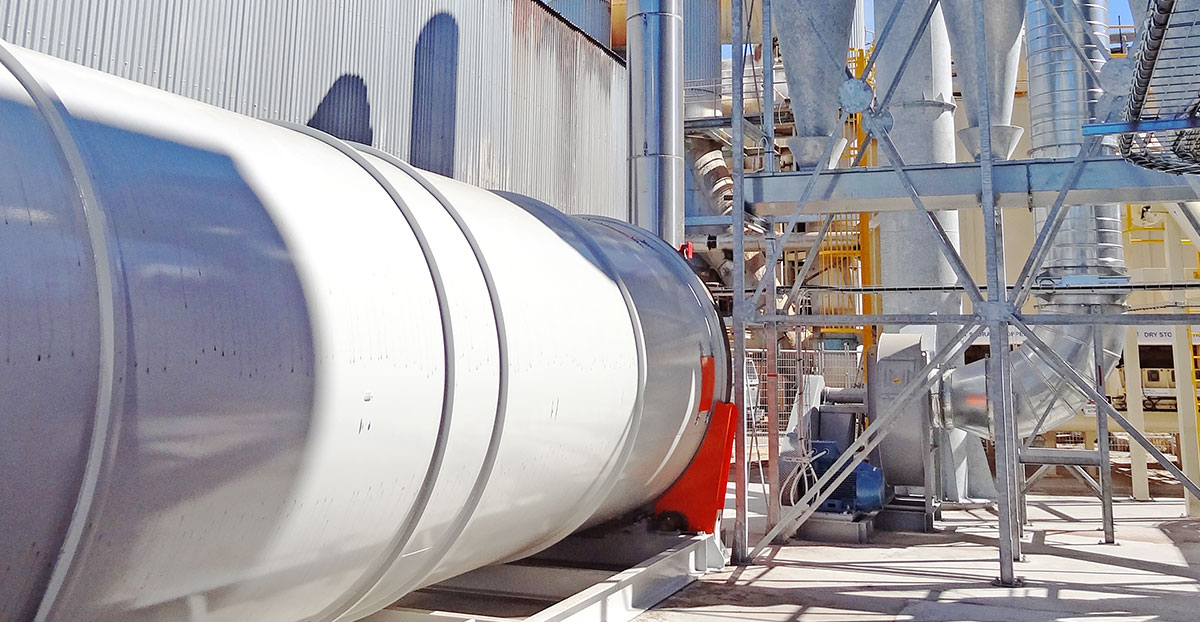
  • rotary drum dryers
  • belt dryers
  • flash dryers

5 – Storage or Handling of the Dried Material

Once dried, the processed material is discharged from the drying machine.

At this point, depending on the company’s type of business, the resulting material can either be stored inside tanks or silos and then sold to third parties, or transported directly to another section of the plant for further processing.

Based on the customer’s needs, RP Engineering designs and manufactures different storage systems, all fully customisable:

  • moving floor systems: in reinforced concrete or metal carpentry, with capacities from 10 to 1000 m3
  • 20” or 40” container systems
  • screw bed systems, with capacities between 2 and 40 m3, for handling bulk materials and dosing in industrial processes

For the sale of dried products to third parties, product handling takes place pneumatically, whereas if the dried material becomes an integral part of the production process, handling is carried out by conveyor belts equipped with suitable automation systems to ensure proper integration into the production system.

Drying Process Line: The 3 Development Phases of the Plant

As previously mentioned, the industrial drying systems designed and assembled by RP Engineering are developed according to the needs of each individual customer.

Depending on the context, the company is available to build the entire plant or only some of its components, incorporating and integrating them into an already existing facility.

RP Engineering’s specialised technicians follow a precise operational process consisting of 3 main stages.

1 – Development

First of all, the customer is carefully listened to in order to understand their needs and requests. Afterwards, the company carries out an analysis of the existing situation, followed by the study and development of customised projects based on standard models, which are then specifically tailored.

2 – Manufacturing

The production phase takes place within the company itself.

In addition to guaranteeing high-quality standards, the manufacturing process is carried out in compliance with agreed costs and timelines, ensuring delivery of the completed plant within the established deadlines.

3 – Service

RP Engineering offers its customers a complete “turnkey” service that includes not only the design, construction, and installation of the drying plant, but also after-sales support, thus guaranteeing professional and customised assistance.

Drying Process Line: Advantages of RP Engineering Plants

RP Engineering manufactures various types of dryers suitable for drying a wide range of materials.

Just to mention some of the most common examples, wood waste can be transformed into pellets, dried algae can be used to obtain components for cosmetic products, while dried insects can provide the basic ingredients for producing flour.

All RP Engineering plants offer exceptional advantages.

  • High quality of the dried product, thanks to a slow and low-temperature drying process, as well as the absence of any contamination between the product and the thermal carrier
  • Low temperatures: the machinery uses low-temperature thermal energy (from 40 to 120 ℃), often recovered from secondary processes through energy recovery systems with recirculation and/or preheating (vapours, water, fumes, air, etc.)
  • Low emissions: the very dense filtering structures can capture even the finest dust particles, guaranteeing extremely low atmospheric emissions
  • Automation: the various systems are equipped with sensors and automation systems that allow fully automatic process management
impianti di essiccazione

Do You Need a Drying Plant for Your Company? Contact RP Engineering

Would you like to install an industrial drying plant, or integrate your company’s production process by adding components that can expand your operational system?
Contact RP Engineering by filling out the dedicated contact form.

A team of professional technicians will be at your disposal to listen to your needs and suggest the most suitable solutions to meet your requirements.

The production of each plant is based on standard models that are then customised according to the specific needs of each individual customer.

The manufacturing of every plant component takes place within RP Engineering’s facilities, thus ensuring all the quality and reliability that distinguish “Made in Italy” products.

The service offered by RP Engineering is fully “turnkey” and also includes pre-sales and after-sales assistance.

Read our latest news
Woody Biomass Drying Plants: Types and Operation
Woody Biomass Drying Plants: Types and Operation Woody biomass drying plants are machines designed and developed to dry wood-based materials using low-temperature thermal sources. These systems make...
Woody Biomass: What You Need to Know About This Important Renewable Energy Source
Woody Biomass: What You Need to Know About This Important Renewable Energy Source The dryers designed and manufactured by RP Engineering are suitable for drying a wide range of materials of various...
Storage System Design: Tanks and Silos
Storage System Design: Tanks and Silos RP Engineering specialises in the construction of industrial drying plants. In particular, the company focuses on the design, manufacturing, and installation of...
55