Call Us
Email address
Address location
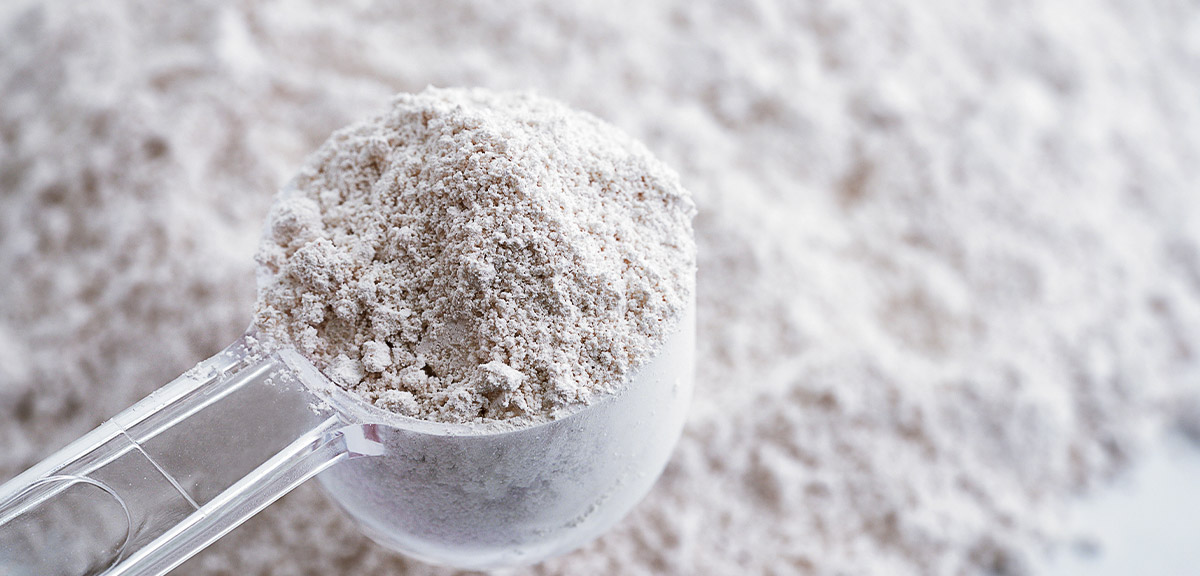
In this article, we will present calcium carbonate powder production machines, equipment equipped with advanced innovations for crushing operations aimed at meeting the needs of various buyers and improving the efficiency of industrial processes. Machines for producing calcium carbonate powder include resilient materials and components. Exceptionally resistant and efficient, they withstand external factors such as mechanical forces and other harsh conditions that may occur during normal operations.
Thanks to the right technical expertise, calcium carbonate powder production machines are quite easy to use and maintain.
Calcium carbonate is the calcium salt of carbonic acid. Its chemical formula is CaCO3.
In nature, it is present — in varying percentages — in various types of so-called “carbonate rocks” such as marble and travertine.
At room temperature, it is solid and white in color. If heated or brought into contact with acidic substances, it decomposes, releasing carbon dioxide.
This material is found in every household. It is what we commonly call “limescale,” referring to the substance dissolved in domestic water supplies that is responsible for limescale deposits causing appliance malfunctions and leaving unattractive whitish-yellow opaque stains on surfaces. The higher the amount of limescale dissolved in water, the harder the water is.
Machines for producing calcium carbonate powder are systems designed for grinding limestone rock (or inert material) where a specific particle size distribution curve must be respected.
RP Engineering is a partner of major companies in the mining and chemical industries. Thanks to these collaborations, the company has gained extensive experience in the production of systems and production lines, specializing in particular in the manufacturing of:
As we will see in more detail below, calcium carbonate powder has multiple applications and uses. In order to be used in one of the many sectors, the raw material must be transformed from naturally occurring rock/mineral by reducing it into granules, flakes, or powder with different particle sizes depending on the required application.
Once extracted from quarries or underground mines, the mineral undergoes specific treatments to be crushed, dried, and ground.
The machines that make particle size reduction possible involve grinding the product. In practice, two pairs of rollers (smooth or grooved) rotate at different speeds, subjecting the product to a cutting and compression effect that reduces its particle size.
The main operation taking place inside calcium carbonate production machines is grinding, namely the progressive reduction of particle size, producing fragments of fairly similar dimensions that are never excessively fine.
The grinding system is progressive and not particularly aggressive. As a result, energy consumption remains low.
Grinding is very different from crushing, which instead occurs through an impact system that produces fragments of varying sizes.

Now that we have seen how calcium carbonate powder is produced, let us examine its many applications. Calcium carbonate powder is used in numerous and diverse sectors.
In the construction sector, calcium carbonate is widely used in paint production. In particular, this material is useful for:
In the chemical industry, calcium carbonate powder is used in PVC extrusion processes to improve mechanical properties and in the production of polyethylene films, both to facilitate manufacturing and to ensure better homogeneity of the finished product.
In the metallurgical sector, calcium carbonate powder is useful for carrying out the following operations:
One of the major uses of calcium carbonate powder is in the paper manufacturing industry. This material increases pH levels during the production process. Furthermore, it acts as a pigment, ensuring high-quality whiteness.
From a production standpoint, calcium carbonate powder allows reduced consumption of fibrous raw materials, enabling machinery to operate at high speeds and promoting faster paper drying.
Very finely ground calcium carbonate is often used in the pharmaceutical industry as an additive, coloring agent, or filler. It is usually added to toothpaste because of its mild abrasive action.
In the cosmetics industry, its mattifying properties are exploited; for this reason, it is added to makeup products such as foundation and blush.
In the food sector, calcium carbonate is used as an additive to regulate acidity, as well as a coloring and stabilizing agent. Since it is an easily absorbable source of calcium, it is also frequently used as a supplement.
In the food industry, calcium carbonate is identified by the code E170.
Considering its characteristics and properties, calcium carbonate is an excellent product for animal bedding. In addition to reducing the use of sawdust, it significantly improves hygiene conditions, thereby reducing the spread of livestock diseases. It also facilitates cleaning operations.
In agriculture, calcium carbonate helps correct soil pH and maintain moisture, thereby preventing the development of fungal diseases.
With over 25 years of experience, RP Engineering specializes in the design, construction, and installation of drying systems for various materials.
The company stands out as a partner of major established industries in the mining and chemical sectors. This, combined with its extensive experience, enables it to design and manufacture crushing machines capable of grinding various types of rock, such as calcium carbonate.
Do you operate in the chemical or mining industry and want to install a calcium carbonate powder production system in your company? Contact RP Engineering by filling out the dedicated contact form.
For decades, RP Engineering has served clients worldwide and stands out for offering customized solutions by creating machinery tailored to the client’s production line and logistics requirements. The company also offers a “turnkey” service. A team of specialized technicians is always available to provide pre-sales and after-sales support.