
RP Engineering

Biomass drying systems: what they are and how they work

Biomass drying systems are machines designed to dry plant-based materials by exploiting low-temperature thermal sources. Thanks to these systems, it is possible to dry materials such as wood waste, bark, sawdust and wood chips, as well as grain waste, fruit, vegetables and recycled paper.
In this article, we will explain in detail the main types of biomass drying systems, how they work and the advantages they offer.

What are biomass drying systems

Biomass drying systems are machines that dry plant-based materials using low-temperature thermal sources such as steam, fumes, water and hot air generated by other industrial processes.

essiccatore gesso

Biomass drying systems: which materials can be processed

RP Engineering dryers are designed to dry various types of materials, primarily biomass.

What is biomass

When talking about biomass, we refer to substances of biological origin – either plant-based or animal-based – that have not undergone fossilization processes. Therefore: wood, plants, branches and twigs, waste from the wood-processing or agri-food industries, organic vegetable waste, residues from agricultural activities, and livestock waste and effluents.

The following materials can therefore be processed in biomass drying systems:

  • Sawdust
  • Wood chips
  • Bark
  • Cereals
  • Fruit and vegetables
  • Grass
  • Chopped agricultural products
  • Sludge

In addition to biomass, drying systems can also process:

  • Recycled paper
  • Recycled plastic
  • Municipal solid waste

The types of biomass drying systems by RP Engineering

RP Engineering designs, manufactures and installs two types of drying systems:

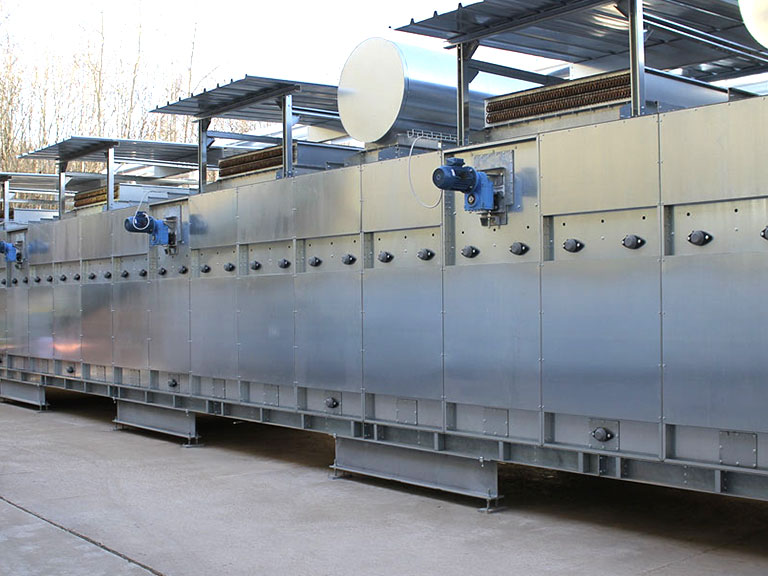
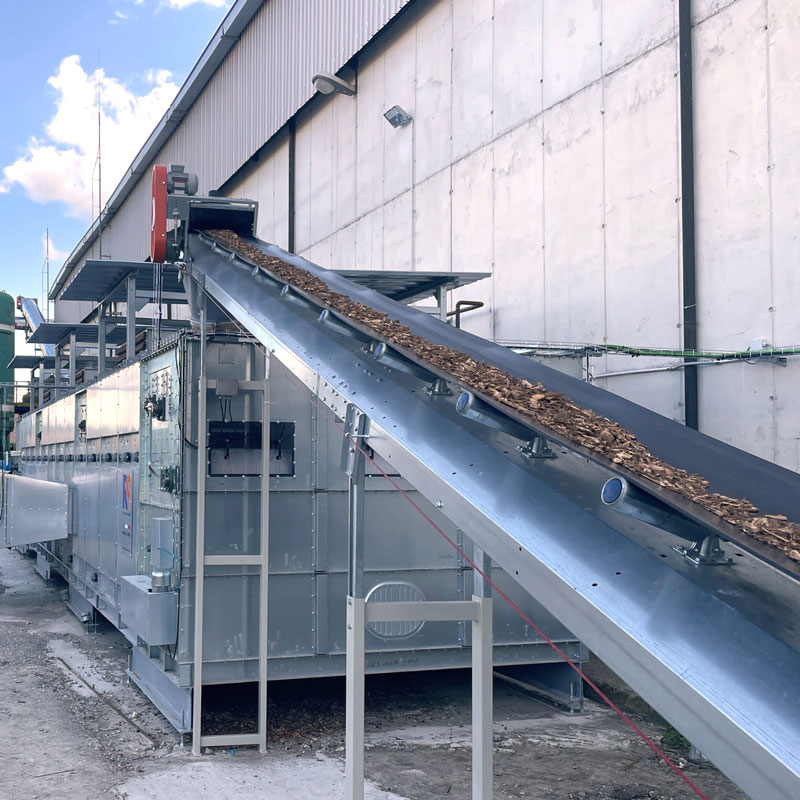
  • Belt dryers
  • Rotary drum drying systems

Belt biomass drying systems

In belt dryers, the airflow moves from top to bottom. It first passes through the heat exchangers located on the upper part of the machine and then flows through the material. The polyester belt, featuring a very tight and highly breathable weave, filters the airflow by retaining dust particles while, at the same time, a centrifugal fan extracts the process air containing steam and expels it into the atmosphere.

1. The product is loaded into the dryer and spread evenly

2. The product passes through the drying zone, which is crossed by hot air generated by the heat exchangers and drawn in by the main fan

stoccaggio per essiccatori

3. The product is discharged

Belt biomass drying systems: all the advantages

The belt dryers manufactured by RP Engineering offer numerous advantages.

  • Quality of the dried product. Slow low-temperature drying preserves the characteristics of the product, preventing any contamination between the product and the thermal carrier
  • Low temperatures. These dryers use low-temperature thermal energy such as fumes, water and steam at 60°C generated by secondary processes
  • Low emissions. In addition to using very low temperatures, these machines are equipped with a tightly woven belt fabric that filters even the finest dust particles, ensuring very low atmospheric emissions (below 20 mg/m3, in compliance with European Community atmospheric emission standards)
  • Automation. The biomass drying systems designed by RP Engineering operate automatically and are equipped with sensors that detect humidity levels as well as software that manages the entire process.

Rotary drum biomass drying systems

Rotary drum biomass drying machines are particularly suitable for drying materials characterized by medium-small particle size and very high initial moisture content.
In rotary drum dryers, the wet material is fed into the machine and, through the rotary movement, is evenly distributed and dispersed inside the dryer. Inside the dryer, the product comes into contact with the hot air generated by the burner and is then subjected to a triple pass inside the rotating drum. During this phase, the dehydration process takes place and is accelerated by the hot air flowing in parallel. At the end of the process, the materials are discharged.

1. The wet product is introduced into one end of the dryer
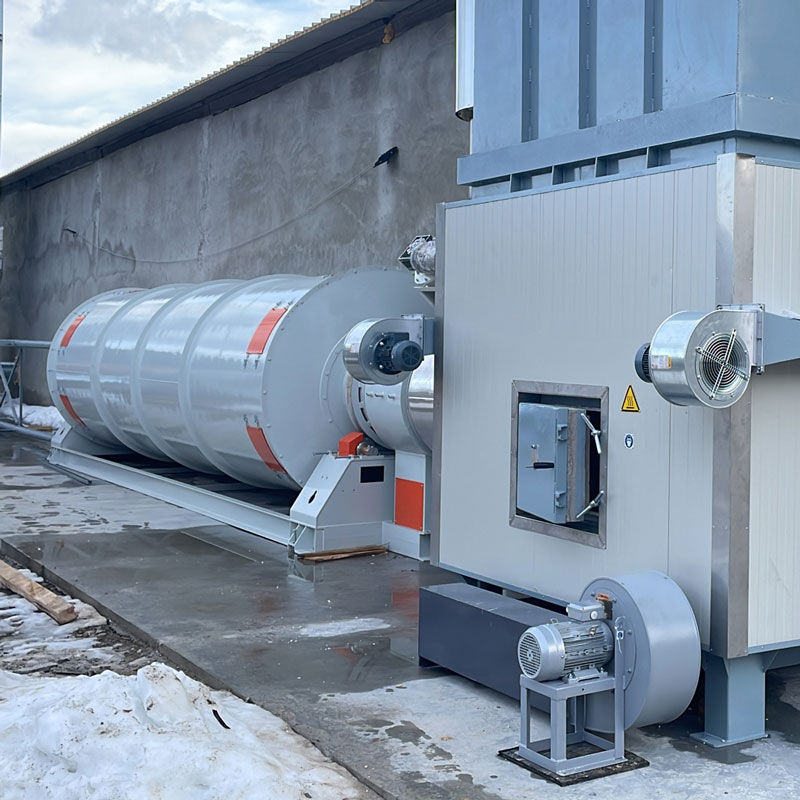
2. The product passes through the rotating drum, where it comes into contact with the hot air produced by the burner

3. The dehydrated and dried product is discharged

Rotary drum biomass drying systems: all the advantages

RP Engineering specializes in the design, production and installation of “DX” series rotary drum dryers. These systems guarantee the following advantages.

  • Flexibility. Triple-pass rotary drum dryers can dry a wide range of materials, even with different particle sizes, and can be configured with different temperature/airflow settings
  • Quality of the dried product. The dried product maintains its original characteristics and properties because the drying process takes place at low temperatures
  • Uniformity. The product is dried evenly and consistently
  • Energy efficiency. This drying system exploits thermal energy, therefore requiring extremely low electrical consumption
  • Low emissions. The drying processes carried out with these systems generate very low atmospheric emissions

Would you like to install a biomass drying system? Choose RP Engineering

RP Engineering is a company specialized in the design, construction and installation of industrial biomass drying systems.

If you would like to install a drying system in your company, contact RP Engineering by filling out the dedicated contact form. For more than 25 years, we have specialized in the design and construction of modular machines that use low-temperature thermal energy.

RP Engineering stands out for offering customized solutions tailored to the customer’s production line and logistics requirements. In addition, the company provides a complete “turnkey” service. Alongside the design, construction and installation of the system, we also offer pre-sales and after-sales support services to our customers.

Read our latest news
Woody Biomass Drying Plants: Types and Operation
Woody Biomass Drying Plants: Types and Operation Woody biomass drying plants are machines designed and developed to dry wood-based materials using low-temperature thermal sources. These systems make...
Woody Biomass: What You Need to Know About This Important Renewable Energy Source
Woody Biomass: What You Need to Know About This Important Renewable Energy Source The dryers designed and manufactured by RP Engineering are suitable for drying a wide range of materials of various...
Storage System Design: Tanks and Silos
Storage System Design: Tanks and Silos RP Engineering specialises in the construction of industrial drying plants. In particular, the company focuses on the design, manufacturing, and installation of...
73